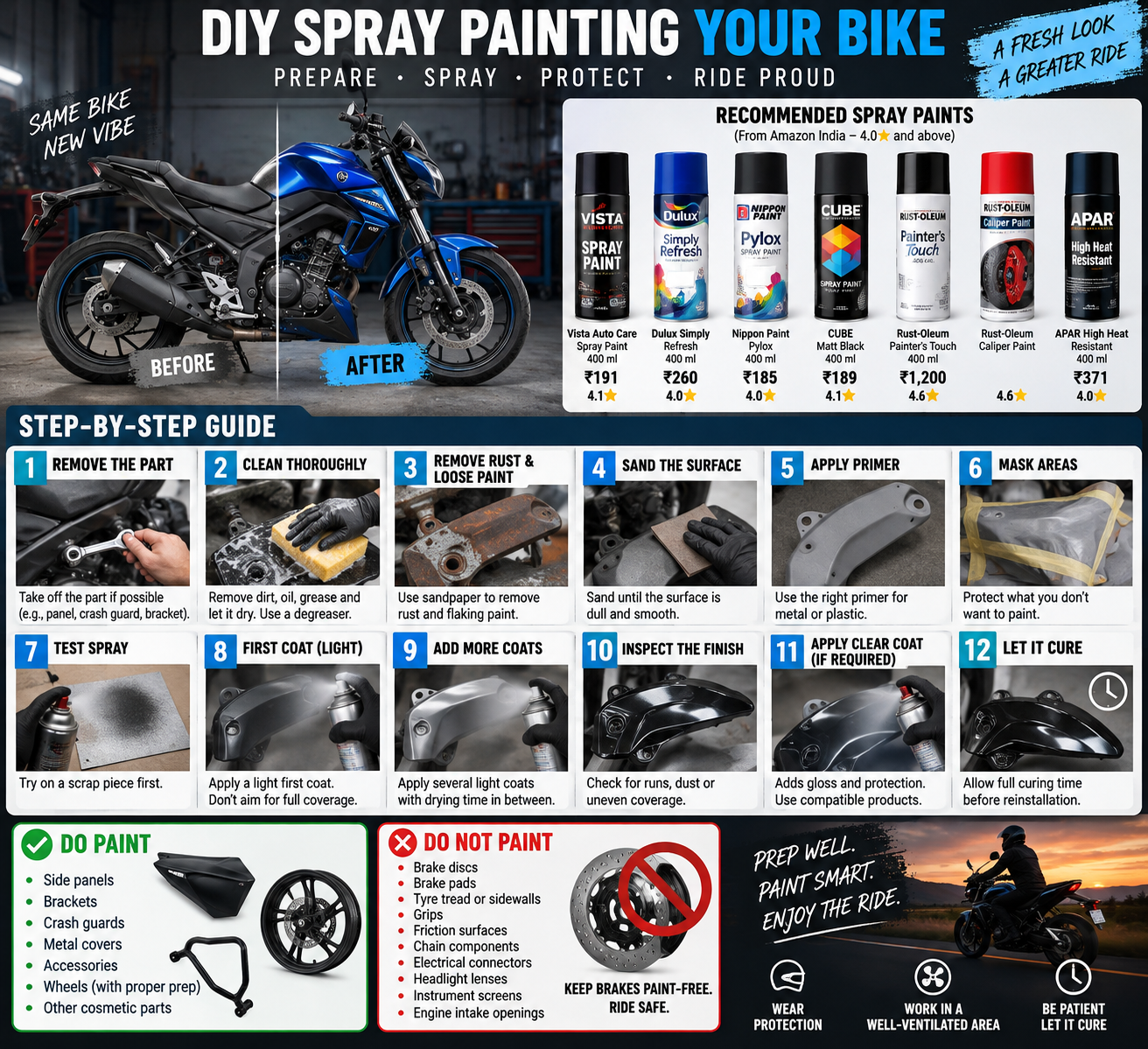
The Honda CB350 is the kind of motorcycle that looks better when it is clean, polished and well cared for. Its classic design also means that exposed metal parts are an important part of its appearance. Unfortunately, regular exposure to rain, humidity, road grime, mud and moisture can eventually lead to corrosion if the motorcycle is not maintained properly.
The good news is that preventing rust is much easier than removing it after it has started.
You do not need to spend hours detailing your CB350 every week. A simple routine of washing correctly, drying the motorcycle properly, protecting exposed metal and paying attention to small rust spots can go a long way.
Honda itself recommends regular cleaning, inspection and appropriate lubrication, and specifically warns that moisture and salt can promote corrosion.
Here is a practical guide to keeping your Honda CB350 rust free for as long as possible.
Why Does the Honda CB350 Develop Rust?
Rust forms when iron or steel is exposed to water and oxygen for an extended period. The process becomes much faster when contaminants such as road salt, mud, dirt and moisture remain on the surface.
For a motorcycle, the problem is not simply rain.
A bike can develop corrosion from:
- Monsoon rain
- High humidity
- Water left after washing
- Mud and road grime
- Coastal air and salt
- Sweat from hands
- Bird droppings
- Road debris
- Parking in damp areas
- Poorly ventilated bike covers
- Scratches that expose bare metal
- Leaving the motorcycle dirty for long periods
Honda recommends washing the motorcycle regularly and paying particular attention to corrosion after exposure to seawater or salt treated roads.
For riders in areas with heavy monsoon weather, this becomes even more important.
Our Top CB350 Picks
Handpicked from across DealPaglu — prices and offers may change.


MT Bike Cleaning Kit Bike Bike Chain Brush-1, Microfiber Glove-1,Microfiber Cloth-1,

1. Don’t Leave Your CB350 Wet
This is probably the simplest and most important rule.
Water itself is not the only problem. Water that remains trapped on the motorcycle is.
After riding through rain, don’t simply park the CB350 under a cover and forget about it.
Moisture can remain around:
- Fasteners
- Frame areas
- Engine mounting points
- Suspension components
- Wheel areas
- Chain and sprockets
- Exhaust components
- Underbody areas
- Joints and crevices
If the bike is covered while it is still wet, you can end up creating a humid environment around the motorcycle.
Honda specifically recommends allowing the motorcycle to dry and warns that moisture can accumulate under poorly ventilated covers.
What to do after riding in rain
If possible:
- Park the motorcycle somewhere ventilated.
- Allow excess water to drain.
- Wipe visible water with a clean microfiber cloth.
- Pay attention to metal joints and difficult-to-reach areas.
- Allow the bike to dry before covering it.
A few minutes of drying can save you a lot of trouble later.
2. Wash Your CB350 Correctly
A common mistake is thinking that washing means simply spraying the motorcycle with a powerful pressure washer.
It doesn’t.
Honda recommends using low pressure water to remove loose dirt and using a soft sponge or cloth with an appropriate mild or neutral detergent. Honda also advises against high pressure washing because it can force water into sensitive components.
A good CB350 washing routine
Start by rinsing the motorcycle with relatively low pressure water.
The objective is to loosen:
- Dust
- Mud
- Road grime
- Insects
- Salt
- Other contaminants
Only after loose dirt has been removed should you gently wash the surfaces.
This matters because rubbing a dusty motorcycle aggressively can drag particles across the paint and create scratches.
Use a soft microfiber cloth or sponge
Avoid using:
- Hard brushes on painted surfaces
- Steel wool
- Sandpaper
- Abrasive cleaners
- Strong acidic cleaners
- Strong alkaline cleaners
Honda’s CB350 owner manual guidance specifically warns against stiff brushes, steel wool, sandpaper and harsh detergents when caring for the motorcycle.
3. Never Wash the Bike When It Is Extremely Hot
If you have just returned from a long ride, give your CB350 time to cool down before washing it.
The engine, exhaust and braking components can become extremely hot.
Honda recommends allowing the engine, muffler, brakes and other high temperature components to cool before washing.
A good habit is:
Ride → park → allow bike to cool → wash → dry → protect.
Don’t rush straight into washing immediately after a long ride.
4. Avoid High Pressure Water
Pressure washing is convenient, but it can cause problems when used incorrectly.
High pressure water can force moisture into areas where you don’t want it, including electrical components, bearings and other sensitive parts.
Honda explicitly advises against high pressure water sprays when cleaning motorcycles.
If you use a pressure washer, keep a safe distance and avoid directing concentrated pressure at:
- Electrical connections
- Bearings
- Switches
- Instrumentation
- Chain seals
- Brake components
- Wheel hubs
- Exhaust openings
For most home washing, a normal low pressure hose is more than sufficient.
5. Dry the CB350 Properly After Washing
This is where many owners make a mistake.They wash the bike, park it in the sun and assume the job is finished.Instead, use a clean microfiber towel to remove excess water.Pay extra attention to:
Around the engine
Look around exposed fasteners and joints where water can remain trapped.
Around the wheels
Check the wheel, brake and hub areas carefully.
Around the chain
The chain should not be left wet after washing.
Around the exhaust
Water and dirt can accumulate around exhaust components.
Under the tank and frame areas
These areas are often overlooked because they aren’t visible during a quick wash.
Honda recommends thoroughly rinsing the motorcycle and drying it with a soft, clean cloth after washing.
6. Protect the Chain
The CB350’s chain is one of the components that needs regular attention.
Water, dirt and road grime can remove protective lubrication and encourage corrosion.
Honda recommends lubricating the drive chain after washing and drying the motorcycle.
A simple routine is:
Clean → dry → lubricate.
Do not simply spray chain lubricant over a dirty, wet chain every time.
First remove accumulated grime using a suitable chain cleaning method. Allow the chain to dry and then apply chain lubricant according to the product instructions.
Important
Never allow chain lubricant or other oily products to reach:
- Brake discs
- Brake pads
- Tyres
Contaminating braking surfaces can seriously reduce braking performance. Honda specifically warns about this.
7. Use Wax or a Suitable Protective Product
Wax isn’t just about making your CB350 shiny.
A suitable wax or protective coating can also help protect appropriate surfaces from moisture and contaminants.
Honda recommends using a non abrasive motorcycle or automotive wax and notes that waxing can help prevent corrosion.
However, don’t apply ordinary wax everywhere.
Be particularly careful with:
- Brake discs
- Brake components
- Tyres
- Matte finished surfaces
Always follow the instructions for the particular product.
For painted body panels, a quality motorcycle safe wax or paint protection product can provide an additional protective layer.
8. Protect Exposed Metal Parts
Some metal components are naturally more vulnerable to corrosion because they are exposed to the environment.
After cleaning and completely drying the motorcycle, appropriate protective products can be used on suitable bare or exposed metal surfaces.
Honda’s maintenance guidance recommends protecting bare steel with a light rust inhibitor after cleaning and drying.
This is particularly useful if your motorcycle:
- Lives outdoors
- Is ridden regularly in rain
- Is stored for long periods
- Is exposed to coastal air
- Is parked in a humid environment
Use the product carefully and never spray random oily or rust prevention products onto brake discs, brake pads or tyres.
9. Be Careful With the Exhaust
The exhaust is one of the most noticeable areas when corrosion or staining begins.
Mud, water, road grime and heat can all affect its appearance.
Don’t wait until the exhaust develops obvious corrosion before paying attention to it.
After washing:
- Clean away mud and grime.
- Rinse thoroughly.
- Dry the surface.
- Inspect for stains or corrosion.
- Use only a suitable product for the particular exhaust surface.
Honda notes that exhaust components can become stained by mud and dust and recommends appropriate cleaning methods rather than aggressive treatment.
10. Check Your CB350 After Every Monsoon Ride
You don’t need to perform a full detailing session after every ride.
But after riding through heavy rain, take two minutes to inspect the motorcycle.
Look for:
Rust spots
Small orange or brown marks are easier to deal with than established corrosion.
Water accumulation
Check areas where water may have collected.
Dirty chain
Rain can wash away lubrication and introduce additional grime.
Mud
Mud holds moisture against metal surfaces.
Damaged paint
A scratch that exposes metal should not be ignored.
Corroded fasteners
Check bolts and exposed metal hardware periodically.
Honda recommends using cleaning as an opportunity to inspect the motorcycle for issues such as rust, damaged components and leaks.
11. Fix Paint Chips and Scratches Quickly
A small scratch might look harmless.
But if it goes through the protective finish and exposes bare metal, it can become an entry point for corrosion.
Don’t wait until the area becomes rusty.
Clean the area first and use an appropriate touch up solution for the affected finish.
Honda’s maintenance guidance recommends addressing chips that expose metal and using suitable primer and touch up paint where appropriate.
For a significant scratch, damaged frame area or corrosion around a structural component, it’s better to have it inspected professionally.
12. Don’t Use the Wrong Cleaning Chemicals
This is another area where motorcycle owners can accidentally create problems.
Household cleaning products aren’t necessarily suitable for motorcycles.
Strong chemicals can damage:
- Paint
- Plastic
- Rubber
- Metal finishes
- Protective coatings
Honda recommends using products specifically designed for motorcycle or automotive surfaces and avoiding harsh detergents and chemical solvents.
For routine washing, keep it simple:
Water + suitable motorcycle cleaner + soft cloth + proper drying.
You don’t need ten different chemicals to maintain a CB350.
13. Don’t Cover a Wet Motorcycle
This deserves its own section because it is such a common mistake.
Imagine this:
You ride home in heavy rain.
You park the bike.
You immediately put the cover on.
The water cannot evaporate properly.
The cover traps humid air around the motorcycle.
Now the motorcycle remains damp for hours.
That’s exactly the situation you want to avoid.
Honda recommends allowing the motorcycle to dry and warns that moisture can build up beneath covers, particularly poorly ventilated waterproof covers.
Better approach
After rain:
Dry the motorcycle → allow ventilation → cover once reasonably dry.
Also make sure the cover itself isn’t holding large amounts of moisture.
14. Choose Your Parking Location Carefully
Where you park your CB350 matters more than many owners realise.
The ideal location is:
- Dry
- Well ventilated
- Protected from direct rain
- Away from standing water
- Away from sprinklers
- Not constantly exposed to humidity
A covered parking space is much better than leaving the motorcycle exposed to rain every day.
But don’t turn a covered space into a sealed, humid environment either.
Ventilation matters.
15. What About Coastal Areas?
If you live near the sea, corrosion prevention becomes even more important.
Salt is particularly aggressive toward metal surfaces.
Honda specifically notes that seawater and salts promote corrosion and recommends thoroughly washing the motorcycle after riding in such conditions.
If you ride near the coast regularly:
Increase your cleaning frequency.
Don’t allow salty road spray to remain on the motorcycle for days.
Dry the bike thoroughly.
Pay attention to hidden areas.
Inspect exposed metal frequently.
Small corrosion spots should be dealt with early.
Use appropriate protective products.
A suitable protective coating can provide an additional barrier on appropriate metal surfaces.
16. How Often Should You Clean Your CB350?
There isn’t one perfect schedule because it depends heavily on how you use the motorcycle.
Daily commuter
A quick wipe and inspection can be useful, with a proper wash when the motorcycle becomes dirty.
Weekend rider
A thorough clean every few rides is usually sufficient, with additional cleaning after rain.
Monsoon riding
Clean the bike more frequently, especially after riding through heavy rain and muddy roads.
Coastal riding
Increase cleaning and inspection frequency because of salt exposure.
Long-term storage
Clean and completely dry the motorcycle before storage, then protect appropriate surfaces and periodically inspect the motorcycle.
Honda recommends cleaning before long-term storage and using suitable lubrication, grease and waxing to protect the motorcycle.
Shield Heavy Duty Bike Cover for Honda Hness Cb350 | All-Season, Tear-Proof Fabric | with Side Mirror Pocket & Buckle Belt | Honda Hness Cb350 Bike Cover (Blue)
There isn’t one perfect schedule because it depends heavily on how you use the motorcycle. Daily commuter A quick wipe and inspection can be useful, with…
17. A Simple CB350 Rust Prevention Routine
You don’t need an elaborate detailing routine.
Here’s a practical one.
After a normal dry ride
2 to 5 minutes
- Quick visual inspection
- Wipe dust if necessary
- Check chain condition
- Look for new scratches or rust spots
After a rainy ride
10 to 20 minutes
- Rinse off dirt
- Wash if necessary
- Dry thoroughly
- Inspect metal parts
- Check chain
- Lubricate the chain when appropriate
- Allow the bike to ventilate before covering
Every few weeks
- Thorough wash
- Clean difficult areas
- Inspect fasteners and exposed metal
- Inspect exhaust
- Inspect chain and sprockets
- Check for paint chips
- Apply suitable protection where appropriate
Before long-term storage
- Thoroughly clean the motorcycle
- Dry it completely
- Lubricate appropriate moving parts
- Protect suitable metal surfaces
- Wax appropriate painted surfaces
- Use a breathable/ventilated cover
- Periodically inspect the bike
Honda’s own storage guidance recommends cleaning before storage, drying the motorcycle, protecting metal surfaces and preventing moisture buildup under the cover.
MT Bike Cleaning Kit Bike Bike Chain Brush-1, Microfiber Glove-1,Microfiber Cloth-1,
You don’t need an elaborate detailing routine. Here’s a practical one. After a normal dry ride 2 to 5 minutes Quick visual inspection Wipe dust if…
18. What NOT to Do When Preventing Rust
Some DIY solutions can actually create new problems.
❌ Don’t spray oil everywhere
Oil on a brake disc or tyre can create a serious safety hazard.
❌ Don’t use sandpaper on painted surfaces
You can damage the finish and expose more metal.
❌ Don’t use steel wool randomly
It can scratch surfaces and finishes.
❌ Don’t pressure wash everything
High pressure water can enter sensitive components.
❌ Don’t cover a wet bike
It can trap moisture.
❌ Don’t ignore tiny rust spots
Small corrosion is easier to address than established rust.
❌ Don’t use aggressive household chemicals
Use products intended for motorcycle or automotive surfaces.
❌ Don’t polish matte surfaces like glossy paint
Some finishes require different care. Honda specifically cautions against applying ordinary wax to matte painted surfaces.
KLYRO Premium Car & Bike Shampoo Thick Snow Foam Car Wash pH Balanced Formula Wax & Ceramic Safe High Foam Cleaner for Cars Bikes SUV Pressure Washer Foam Cannon Use 500ML (Pack of 1)
Some DIY solutions can actually create new problems. ❌ Don’t spray oil everywhere Oil on a brake disc or tyre can create a serious safety hazard. ❌ Don’t…
19. What If Your CB350 Already Has Rust?
Prevention is ideal, but what if you already see a few orange spots?
First, determine how serious the corrosion is.
Surface staining
If it is only a small surface mark, gentle cleaning and an appropriate metal-safe corrosion treatment may be sufficient.
Deeper corrosion
If you see:
- Pitting
- Flaking metal
- Deep rust
- Rust around structural components
- Significant corrosion around fasteners
- Corrosion spreading under paint
don’t simply cover it with oil or polish.
The affected area may need proper removal, refinishing or replacement.
For structural parts, frame areas, braking components or anything you’re unsure about, professional inspection is the safer choice.
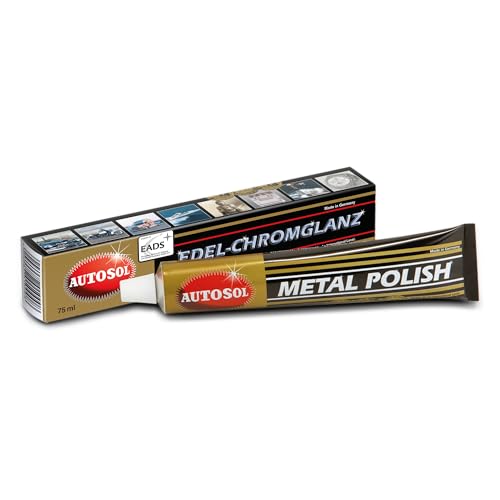
AUTOSOL Asl_Pol Metal Polish-75Gm(1001000),White
Prevention is ideal, but what if you already see a few orange spots? First, determine how serious the corrosion is. Surface staining If it is only a small…
20. The Biggest Mistake: Waiting for Rust to Become Visible
Rust prevention isn’t really about one magical product.
It is about controlling moisture and contamination consistently.
A CB350 that is:
Clean + dry + lubricated where required + protected + inspected
will generally be much easier to keep in good condition than a motorcycle that is washed only when it becomes visibly dirty.
Honda’s own guidance emphasises frequent cleaning because a clean motorcycle makes it easier to identify problems early.
Waxpol Auto Polish 200 gm with Carnauba Wax – Multi-Surface Polish for Cars, Bikes, Metal, Plastic & Wood – High Gloss, Water Beading & UV Protection
Rust prevention isn’t really about one magical product. It is about controlling moisture and contamination consistently . A CB350 that is: Clean + dry +…
CB350 Rust Prevention Checklist
Save this checklist and use it during your regular motorcycle maintenance.
After rain
☐ Rinse off mud and road grime
☐ Dry the motorcycle
☐ Check exposed metal
☐ Check the chain
☐ Lubricate the chain when appropriate
☐ Allow the motorcycle to ventilate
☐ Cover only after it is reasonably dry
During regular cleaning
☐ Use low pressure water
☐ Use a motorcycle-safe cleaner
☐ Use a soft sponge or microfiber cloth
☐ Avoid harsh chemicals
☐ Avoid steel wool and aggressive brushes
☐ Dry the motorcycle completely
☐ Check for scratches and paint chips
Every few weeks
☐ Inspect fasteners
☐ Inspect exhaust
☐ Inspect wheels and exposed metal
☐ Check chain and sprockets
☐ Look for early rust spots
☐ Protect suitable metal surfaces
☐ Wax appropriate painted surfaces
Final Thoughts
Keeping a Honda CB350 free from rust doesn’t require expensive detailing or spending hours cleaning the motorcycle every day.
The biggest difference comes from consistency.
Don’t leave mud sitting on the bike for weeks. Don’t cover it while it is soaking wet. Don’t ignore small orange spots. Don’t blast sensitive areas with high pressure water. Keep the chain properly maintained, use suitable protective products and inspect the motorcycle regularly.
Most importantly, treat the monsoon and humid weather as the time to increase your maintenance routine, rather than waiting for rust to appear.
A few minutes of care after a rainy ride can potentially save you from much more expensive corrosion repairs later.
The simple CB350 formula is:
Wash it. Dry it. Protect it. Inspect it. Repeat.
For model-specific maintenance intervals and procedures, always refer to the owner’s manual for your particular CB350 variant. Honda provides its India owner manuals through its official owner’s-manual portal.