The Honda CB350 is already a comfortable motorcycle for everyday riding. Its relaxed ergonomics, wide seat and smooth engine make it a good choice for commuting and weekend rides.
But after spending 2–4 hours in the saddle, many riders start noticing a sore backside, wrist pressure, cramped legs, shoulder fatigue or wind fatigue.The good news is that you don’t need to transform the CB350 with expensive modifications.
The best approach is to identify where the discomfort is coming from and fix that specific problem.
Our Top CB350 Picks
Handpicked from across DealPaglu — prices and offers may change.
Sahara Seats Compatible with Highness CB 350 Original Type Cushion Long Seat Cover (Brown)
1. Start With the Seat
For many CB350 owners, the seat is the first thing worth addressing.A seat can feel perfectly comfortable for 30 minutes but become uncomfortable after a couple of hours because your weight remains concentrated in the same areas.
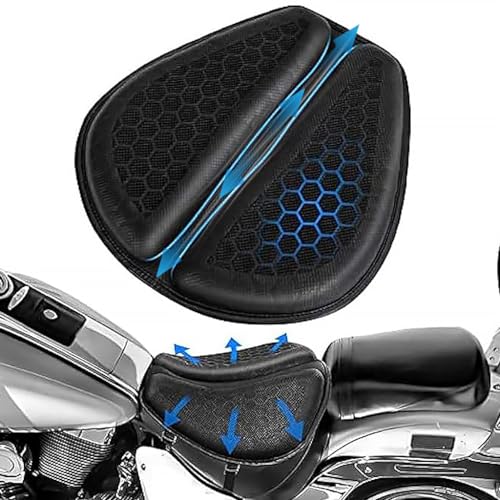
Try a Motorcycle Seat Cushion First
Before permanently modifying the stock seat, a removable memory-foam or gel cushion is an inexpensive way to see whether additional cushioning actually improves your comfort.
Recommended: FOVERA Memory Foam Motorcycle Seat Cushion
It can be useful for longer rides because it:
- Adds another layer of cushioning
- Helps distribute pressure
- Can reduce discomfort on longer rides
- Is removable
- Doesn’t permanently alter the original CB350 seat
For riders who regularly do long-distance touring, a professionally reshaped seat with high-density foam can be a better permanent solution.
Don’t simply choose the softest seat
This is a common mistake.
Extremely soft foam can feel great initially but allows your body to sink into one position. After a couple of hours, that can actually increase discomfort.
Support matters more than softness.
2. Get Your Riding Position Right
Before buying accessories, look at how you actually sit on the CB350.
Your elbows should have a slight bend rather than being completely locked.
Your shoulders should remain relaxed.
Your wrists shouldn’t be carrying your upper-body weight.
Your knees should also sit naturally against the tank rather than being forced outward.
If you find yourself constantly supporting your body with your hands, your riding position may be contributing to wrist and shoulder pain.
3. Consider Handlebar Changes Carefully
Handlebar position can make a surprisingly large difference on long rides.
If you’re experiencing:
- Wrist pain
- Shoulder tension
- Upper-back discomfort
- Excessive forward lean
a different handlebar or carefully selected riser setup may help.
But don’t blindly install the tallest or widest handlebar you can find.
Changing the handlebar can affect cable routing, brake hose length, switch wiring and steering feel.
The objective isn’t to make the handlebars as high as possible.
The objective is to put your hands in a natural position while maintaining proper control.
4. Don’t Ignore Your Foot Position
Your feet are another important part of riding comfort.
If your knees feel cramped during longer rides, experiment with your normal foot position before modifying the motorcycle.
During a long ride, occasionally change your foot position and stretch your legs when safe.
For frequent touring, properly designed touring footpeg or control modifications can provide additional legroom, but they must preserve comfortable access to the brake and gear lever.
Never sacrifice control simply to gain a little extra legroom.
5. Improve the Grips
Grips are relatively inexpensive but can make a noticeable difference.
If your hands become numb or your palms hurt, consider grips that provide:
- A comfortable diameter
- Better vibration absorption
- A secure non-slip surface
- Enough cushioning without becoming excessively soft
Don’t assume thicker grips are automatically better.
The ideal diameter depends on your hand size and how naturally you can operate the controls.
6. Reduce Wind Fatigue
At city speeds, wind usually isn’t a major issue.
At highway speeds, however, continuous airflow against your chest can become surprisingly tiring.
If you regularly tour on the CB350, a properly designed touring windshield can reduce the amount of wind hitting your torso.
But bigger isn’t necessarily better.
A poorly designed windshield can introduce:
- Helmet buffeting
- Extra wind noise
- Turbulence
- Additional vibration
A smaller, properly positioned screen can sometimes be more comfortable than a huge windshield.
7. Check Your Suspension Setup
If the CB350 feels harsh over broken roads, don’t immediately assume you need aftermarket suspension.
First check whether the suspension is correctly adjusted and functioning properly.
Pay attention to:
- Rear suspension preload
- Tyre pressure
- Suspension condition
- Passenger weight
- Luggage load
Don’t lower tyre pressure simply to make the motorcycle feel softer.
Use the manufacturer’s recommended tyre pressures, particularly when carrying a passenger or luggage.
8. Your Tyres Can Change the Ride
Tyres have a major influence on how a motorcycle feels.
If your CB350 feels unnecessarily harsh, nervous or uncomfortable, check the tyres before spending money on accessories.
Look for:
- Correct tyre pressure
- Uneven wear
- Excessive tyre age
- Damage
- Correct tyre size
- Overall tyre condition
If you’re replacing tyres, choose them according to your actual usage.
A tyre that works well for city riding isn’t necessarily the best choice for someone who spends most weekends touring.
9. Don’t Underestimate Riding Gear
Comfort isn’t only about the motorcycle.
Your clothing can make a huge difference during a long ride.
For touring, consider:
- Proper motorcycle riding pants
- Padded riding gloves
- Comfortable riding boots
- Moisture-wicking base layers
- A properly fitting jacket
Avoid clothing that restricts your knees or bunches around your waist.
A good riding jacket should allow you to sit naturally without constantly pulling against your shoulders.
10. Investigate New Vibrations
The CB350 is generally a relaxed motorcycle, but vibration can become noticeable depending on speed and riding conditions.
If you suddenly notice significantly more vibration than before, don’t simply add accessories to mask it.
Check for things such as:
- Loose fasteners
- Chain condition and adjustment
- Engine mounting issues
- Worn components
- Tyre problems
A new vibration that wasn’t there previously is worth investigating.
STHIRA Motocycle Seat Cushion Gel Seat For Bike,Detachable Cycle Seat Cover Gel Pad,High Density Gel 3D Honeycomb Structure Shock Absorption&Breathable&Universal Motorcycle Gel Seat Pad For Long Rides
The CB350 is generally a relaxed motorcycle, but vibration can become noticeable depending on speed and riding conditions. If you suddenly notice…
11. Take Breaks Before You Get Exhausted
This is probably the cheapest comfort upgrade of all.
Don’t wait until your back, wrists and legs are already hurting.
On longer rides:
- Get off the motorcycle periodically
- Walk around
- Stretch your legs
- Move your shoulders
- Drink some water
Even a short break can make the second half of a ride considerably easier.
The rider is part of the comfort equation too.
Sahara Seats Compatible with Highness CB 350 Original Type Cushion Long Seat Cover (Brown)
This is probably the cheapest comfort upgrade of all. Don’t wait until your back, wrists and legs are already hurting. On longer rides: Get off the…
Best CB350 Comfort Upgrades
| Upgrade | Comfort impact | Cost |
|---|---|---|
| Correct riding posture | High | ₹0 |
| Correct tyre pressure | High | ₹0 |
| Motorcycle seat cushion | High | Low |
| Professionally reshaped seat | High | Medium |
| Better grips | Medium | Low |
| Suspension setup/check | Medium–High | Low–Medium |
| Touring windshield | Medium–High | Medium |
| Handlebar adjustment | Medium–High | Medium |
| Touring tyres | Medium | Medium–High |
| Footpeg modifications | Medium | Medium |
Don’t Modify Everything at Once
This is one of the biggest mistakes when making a motorcycle more comfortable.
If you install a new seat, handlebar, risers, windshield, footpegs and suspension at the same time, you won’t know which modification actually helped.
Instead:
Change one thing → ride for a few hundred kilometres → evaluate → decide what’s next.
For many CB350 owners, the biggest improvements will come from a better-supported seat, correct riding posture, proper tyre pressure and reducing wind fatigue.
You don’t need a ₹50,000 modification list to make the CB350 a better touring motorcycle.
Fix the source of the discomfort rather than modifying the motorcycle just for the sake of adding accessories.