Affiliate Disclosure: This article contains Amazon affiliate links. If you purchase through these links, we may earn a small commission at no extra cost to you.
TL;DR
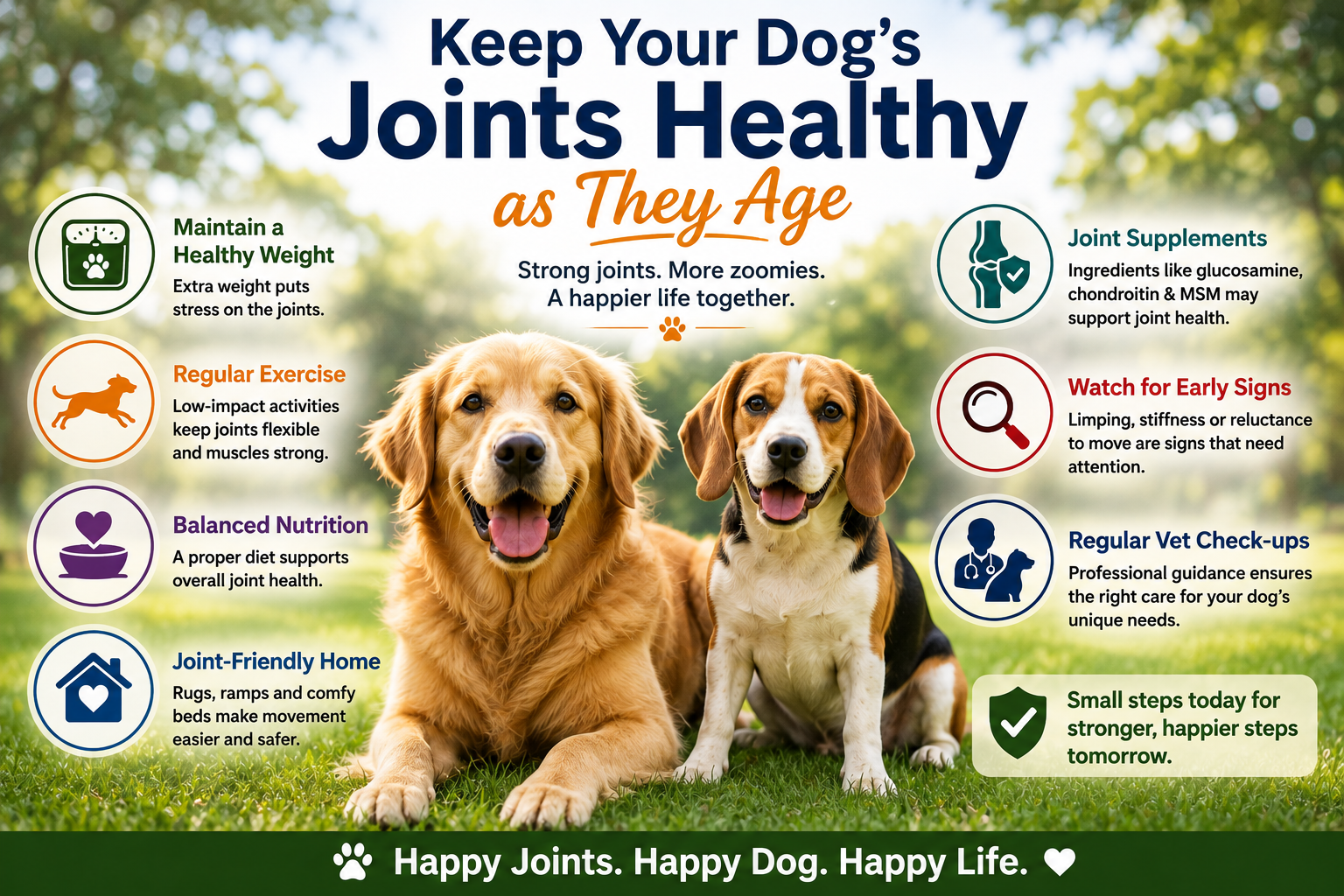
- Healthy weight, regular low-impact exercise and good nutrition are the foundation of long-term joint health.
- Joint supplements containing ingredients such as glucosamine and chondroitin may be worth considering, but they should complement—not replace—proper veterinary care.
- For a tablet-based option, Petjoint Dog Hip and Joint Supplement stands out in the products reviewed for its combination of glucosamine, chondroitin, Boswellia, Withania and other nutrients.
- If your dog prefers chews, Absolut Pet Hip & Joint Chews provide glucosamine, chondroitin and collagen in a chew format.
- Limping, persistent stiffness, difficulty standing or reluctance to walk should not simply be blamed on ageing. Get your dog checked by a veterinarian.
Introduction
As dogs get older, it is common for them to become less energetic and take longer to get up after resting. But reduced mobility should not automatically be accepted as an unavoidable part of ageing.
Joint health depends on several factors, including body weight, activity, muscle strength, nutrition and any underlying joint disease. The good news is that many of these factors can be managed throughout a dog’s life.
For Indian pet parents, joint supplements are also easy to find online, but choosing one can be confusing because products use different combinations of ingredients and formats. This guide explains what actually matters and looks at a few dog joint supplements available on Amazon India.
What Causes Joint Problems as Dogs Age?
Ageing can be accompanied by changes in cartilage, muscles and joints. Some dogs also develop osteoarthritis or other musculoskeletal problems that make movement uncomfortable.
You may notice subtle changes before obvious limping appears. A dog that previously jumped onto the sofa may stop doing so, take longer to climb stairs, avoid running or appear stiff after sleeping.
These signs deserve attention rather than being dismissed as “just old age”.
7 Ways to Support Your Dog’s Joint Health
Top Picks for This Article
Handpicked from across DealPaglu — prices and offers may change.



1. Keep Your Dog at a Healthy Weight
This is one of the most important things you can do for your dog’s joints.
Extra body weight increases the mechanical load placed on weight-bearing joints. Maintaining a lean, healthy body condition can therefore make movement easier and reduce unnecessary stress on the joints.
Don’t decide that your dog needs to lose weight simply by looking at the number on the weighing scale. Breed, body size, muscle mass and individual condition all matter. Ask your veterinarian to assess your dog’s body condition and recommend an appropriate feeding plan if necessary.
Also remember that treats count towards daily calorie intake.

Purepet Adult Dry Dog Food 10kg | Meat & Rice Flavour | Promotes Health & Vitality | Immune Support | Healthy Digestion | Nutrient Rich
This is one of the most important things you can do for your dog’s joints. Extra body weight increases the mechanical load placed on weight-bearing…
2. Keep Your Dog Moving
Older dogs still need exercise, but the type and intensity of activity may need to change.
For a healthy senior dog, regular controlled walks are generally more useful than occasional bursts of intense activity. If your dog becomes stiff after long walks, shorter and more frequent walks may be easier to tolerate.
Watch your dog’s response rather than following a rigid exercise target. Increased stiffness, limping or obvious discomfort is a reason to reduce the activity and speak to your veterinarian.

Basil Dental Care Twisted Chew Sticks Pets Treats and Chews, Light and Healthy for Dogs (200gms in a Packet) Dental Cavities and Cleans - Pack of 1
Shop Basil Dental Care Twisted Chew Sticks Pets Treats and Chews, Light and Healthy f on Amazon. Best Pet Supplies deals & discounts.
3. Avoid Sudden Increases in Exercise
A dog that spends most of the day resting should not suddenly be taken on a long hike or extended run.
Increase activity gradually. This is particularly important for older dogs or dogs that have already started showing stiffness.
Regular moderate movement helps maintain muscle strength, while sudden excessive activity can put unnecessary stress on joints and soft tissues.
Pedigree Dentastix Oral Care Dog Treat, Adult Medium Breed (10-25 kg), 180 g, Recommended by Vets, Supports Gum Health, Reduces Risk of Gum diseases
A dog that spends most of the day resting should not suddenly be taken on a long hike or extended run. Increase activity gradually. This is particularly…
4. Feed a Balanced Diet
Joint health does not depend on one magic ingredient. Your dog’s overall diet needs to provide appropriate calories, protein and essential nutrients.
As dogs age, their nutritional requirements can change, particularly when their activity level decreases or their body condition changes.
If your dog has a diagnosed condition, ask your veterinarian whether the current diet is appropriate before adding multiple supplements.
Meat Up Adult Dry Dog Food 20kg (10kg + 10kg) | Chicken Flavour | Glucosamine for Healthy Joints & Strong Bones | Enriched with Vitamins & Minerals | Supports Digestive Health
Joint health does not depend on one magic ingredient. Your dog’s overall diet needs to provide appropriate calories, protein and essential nutrients. As…
5. Make Your Home Easier for an Older Dog
Small changes around the house can make a surprisingly big difference.
If your dog struggles with slippery floors, provide rugs or other surfaces that offer better traction. Keep frequently used areas easy to navigate and consider whether stairs, high furniture or other obstacles are becoming difficult.
A supportive bed can also provide a more comfortable resting place.
The goal is not to stop your dog from moving. It is to reduce unnecessary slipping, jumping and difficult movements while allowing safe activity.
Drools Adult Dry Dog Food 1.2kg | Chicken & Egg Flavour | Omega 3 & 6 for Growth | Better Digestibility | Supports Joint Health
Small changes around the house can make a surprisingly big difference. If your dog struggles with slippery floors, provide rugs or other surfaces that…
6. Watch for Early Mobility Changes
Pay attention to changes in everyday behaviour.
Look for:
- Difficulty getting up after sleeping
- Reluctance to climb stairs
- Less interest in walks or play
- Stiffness after exercise
- Difficulty jumping onto familiar furniture
- Limping or favouring one leg
- Changes in walking speed
- Difficulty sitting or lying down
- Becoming unusually irritable when handled
A gradual change can be easy to miss because it happens over months. Taking occasional videos of your dog walking, climbing stairs or getting up can help you notice changes and can also give your veterinarian useful information.
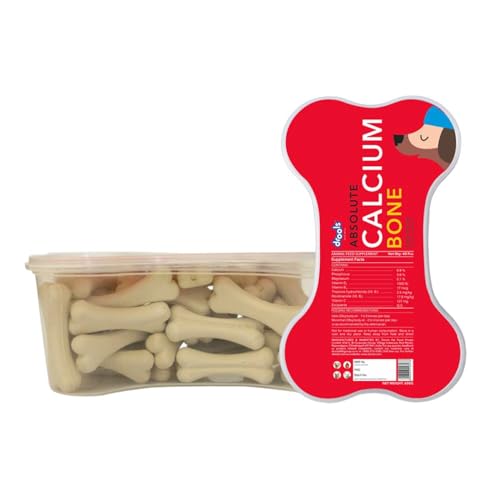
Drools Absolute Dog Supplement Treats 600g Jar (40 Pieces) | Supports Joint Health | Strengthens Teeth | Promotes Dental Cleaning | Easily Digestible | Suitable for All Life Stages (Standard)
Pay attention to changes in everyday behaviour. Look for: Difficulty getting up after sleeping Reluctance to climb stairs Less interest in walks or play…
7. Consider a Joint Supplement When Appropriate
Joint supplements are popular because they can be an easy addition to a dog’s routine.
Products for dogs commonly contain ingredients such as glucosamine, chondroitin, MSM, collagen or botanical ingredients. However, more ingredients do not automatically mean a better product.
Evidence for individual joint supplements varies, and supplements should not be treated as replacements for diagnosis or pain management. If your dog already has arthritis, takes medication or has another medical condition, discuss supplementation with your veterinarian first.
Drools Adult Wet Dog Food 2.25kg (150g x 15) Pack of 15 | Real Chicken and Chicken Liver Chunks in Gravy | Better Digestibility & Health | Healthy Skin & Coat | Maintains Joint Health
Joint supplements are popular because they can be an easy addition to a dog’s routine. Products for dogs commonly contain ingredients such as glucosamine…
Best Dog Joint Supplements to Consider
The Amazon listings reviewed for this article included several joint-care products. The following options had meaningful customer feedback compared with many of the other listings reviewed.
Best Overall Tablet Option: Petjoint Dog Hip and Joint Supplement
Petjoint Dog Hip and Joint Supplement Tablets are aimed specifically at adult and senior dogs and contain a combination of glucosamine, chondroitin, Boswellia, Withania, vitamin C and manganese.
The Amazon listing reviewed showed a 4.6/5 rating from 146 ratings, giving it substantially more customer feedback than several other joint supplements in the same search.
Why consider it:
- Tablet format
- Glucosamine and chondroitin
- Includes Boswellia and Withania
- Contains vitamin C and manganese
- Specifically positioned for adult and senior dogs
- Stronger customer-feedback base than many alternatives reviewed
Limitations: The presence of several ingredients does not guarantee that every dog will benefit. The appropriate dose also depends on the individual product instructions and your dog’s size and health.
Best for: Pet parents who prefer a tablet-based joint supplement with a broader ingredient combination.
Check Petjoint Dog Hip and Joint Supplement on Amazon India
Best Chew Option: Absolut Pet Hip & Joint Chews
If your dog dislikes tablets, a chew can be easier to incorporate into the daily routine.
The Absolut Pet Hip & Joint Chews listing reviewed contains glucosamine, chondroitin and collagen and comes as a 60-chew product.
The listing showed a 4.0/5 rating from 125 ratings. It was also marked as a bestseller in the Dog Hip & Joint Care category at the time the listing was captured.
The listed price was ₹999, with an MRP of ₹1,399 in the captured Amazon listing. Prices, discounts and coupons can change, so check the current listing before purchasing.
Why consider it:
- Convenient chew format
- Glucosamine and chondroitin
- Contains collagen
- 60-chew pack
- Easier option for dogs that resist conventional tablets
Limitations: A chew format can make administration easier, but it is still important to follow the product’s feeding instructions. Don’t give additional supplements simply because your dog enjoys the chew.
Best for: Dogs and owners who prefer a chew over tablets.
Check Absolut Pet Hip & Joint Chews on Amazon India
Another Chew Option: TailsAlive Hip & Joint Soft Chews
The TailsAlive Hip & Joint Soft Chews listing describes a formula containing glucosamine, chondroitin and MSM and is designed around mobility and flexibility support.
The listing reviewed showed a 4.2/5 rating from 100 ratings.
Why consider it:
- Soft-chew format
- Glucosamine and chondroitin
- Includes MSM
- 30-chew pack
- Useful alternative if your dog accepts soft chews more readily than tablets
Limitations: The product had less ingredient breadth than some multi-ingredient formulas reviewed, and the captured listing did not provide enough verified information to make a meaningful price-to-dose comparison.
Best for: Owners looking for a straightforward soft-chew format.
Check TailsAlive Hip & Joint Soft Chews on Amazon India
Petjoint vs Absolut Pet Chews vs TailsAlive
| Product | Format | Key ingredients listed | Amazon rating in captured listing | Best for |
|---|---|---|---|---|
| Petjoint Dog Hip & Joint | Tablets | Glucosamine, chondroitin, Boswellia, Withania, vitamin C, manganese | 4.6/5 from 146 ratings | Tablet users |
| Absolut Pet Hip & Joint | Chews | Glucosamine, chondroitin, collagen | 4.0/5 from 125 ratings | Dogs that prefer chews |
| TailsAlive Hip & Joint | Soft chews | Glucosamine, chondroitin, MSM | 4.2/5 from 100 ratings | Simple chew format |
The most important difference is format and ingredient combination, not simply the star rating. Petjoint has the strongest customer-feedback profile among these three listings and a broader listed ingredient combination, while the other two may be easier to give to dogs that dislike tablets.
Which Joint Supplement Is Better?
Choose Petjoint if you want a tablet
Petjoint makes the most sense if your dog accepts tablets and you want a product combining glucosamine and chondroitin with additional listed ingredients.
Its 4.6/5 rating from 146 ratings also provides a larger feedback base than the other two products reviewed here.
Choose Absolut Pet Chews if your dog hates tablets
The 60-chew format is the main attraction. If giving tablets becomes a daily struggle, a palatable chew can make consistency easier.
The captured listing also showed a price of ₹999, but you should check Amazon for the current price before buying.
Choose TailsAlive if you prefer a soft chew
TailsAlive provides another chew-based option with glucosamine, chondroitin and MSM. It can be considered if your dog readily accepts soft chews and you prefer this ingredient combination.
What Should You Look for in a Dog Joint Supplement?
Glucosamine and Chondroitin
These are among the most common ingredients found in canine joint supplements.
However, don’t assume that a product containing these ingredients will automatically produce a noticeable improvement in every dog. Joint supplements vary in formulation, dosage and evidence, and a dog with significant arthritis may need a broader treatment plan.
MSM
MSM is another ingredient frequently found in joint products. Its presence may be useful when comparing formulas, but it should not be the only reason to choose one supplement over another.
Omega-3 Fatty Acids
Omega-3 fatty acids are also relevant to canine joint nutrition. However, don’t start adding separate fish-oil products without considering your dog’s complete diet and health status.
More supplements are not necessarily better.
Dose Matters
One of the biggest mistakes is looking only at the ingredient name.
Two products may both say “glucosamine” on the front of the package but provide very different amounts per serving. When comparing products, check the actual nutritional or ingredient information and the recommended serving for your dog’s size.
When Should You See a Veterinarian?
A joint supplement is not a substitute for veterinary diagnosis.
Arrange a veterinary assessment if your dog has:
- Persistent limping
- Significant difficulty standing
- Sudden reluctance to walk
- Repeatedly crying or reacting painfully when moving
- Swollen joints
- A sudden change in gait
- Difficulty using a particular leg
- Severe stiffness that is getting worse
- Loss of appetite or other illness alongside mobility changes
Older dogs can develop several conditions that affect mobility, and not all of them are simply arthritis.
Early assessment is particularly important when the change is sudden or progressing quickly.
Common Mistakes When Managing an Older Dog’s Joints
Giving supplements instead of addressing weight
A joint supplement cannot compensate for excessive body weight. If your dog is overweight, weight management may be one of the most useful things you can do for long-term mobility.
Stopping exercise completely
A stiff dog may appear to need complete rest, but unnecessarily restricting movement can contribute to muscle loss and reduced fitness.
Instead, work towards controlled, appropriate activity. If exercise causes pain or worsening stiffness, seek veterinary advice.
Starting several supplements at once
Adding multiple products makes it difficult to determine what your dog is actually receiving and whether a particular supplement is helping.
Choose carefully and discuss combinations with your veterinarian.
Choosing only by star rating
A 5-star rating with very few reviews does not necessarily tell you more than a 4.5-star product with substantial customer feedback.
Look at the formulation, intended use, serving instructions and suitability for your dog.
Assuming every senior dog needs the same supplement
A small older dog, a large-breed senior dog and a dog already diagnosed with arthritis may have very different needs.
Your veterinarian can help determine whether your dog needs a supplement, a diet change, medication, rehabilitation or a combination of approaches.
How to Make Your Dog’s Home More Joint-Friendly
You don’t need expensive equipment to make an older dog’s environment easier.
Start with the basics:
- Put non-slip rugs or mats on slippery floors.
- Keep food and water easily accessible.
- Reduce unnecessary jumping from high furniture.
- Provide a comfortable bed in a warm, quiet area.
- Keep nails appropriately trimmed so your dog can maintain traction.
- Avoid forcing an older dog to repeatedly climb difficult stairs.
- Keep pathways clear of objects that could cause falls.
These changes can be especially useful for dogs that have already started experiencing mobility problems.
Important Caveat About Joint Supplements
It is easy for joint supplements to sound more powerful than they really are because packaging often lists numerous ingredients and benefits.
Think of supplements as one possible part of a joint-care strategy, not as a cure for arthritis.
A complete approach may involve weight management, appropriate exercise, nutrition, environmental changes, rehabilitation and, when necessary, veterinary-prescribed pain management.
Also check the ingredient list carefully if your dog has food allergies, digestive sensitivities or another medical condition.
Final Verdict
The best way to protect your dog’s joints as they age is not to rely on a supplement alone. Maintaining a healthy weight, keeping your dog appropriately active, feeding a balanced diet and noticing mobility changes early are more important foundations.
If you want to add a joint supplement, Petjoint Dog Hip & Joint Supplement is the strongest tablet option among the products reviewed here because it combines glucosamine and chondroitin with several additional listed ingredients and had the strongest customer-feedback profile in the captured listings.
If your dog refuses tablets, Absolut Pet Hip & Joint Chews are the more practical choice, while TailsAlive Hip & Joint Soft Chews provide another chew-format alternative.
For a dog already showing significant stiffness, limping or pain, however, see a veterinarian before relying on any supplement. The right joint-care plan should be based on your dog’s actual condition, weight, age, activity level and medical needs.